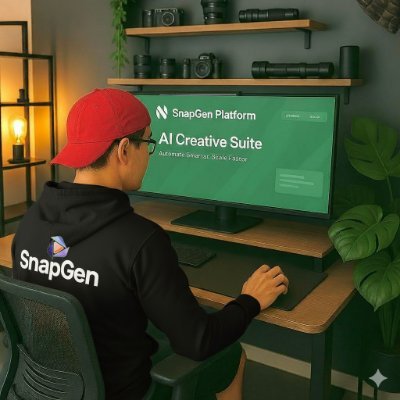
Screenify Studio vs OBS: Which Should You Use?
OBS is free, powerful, and open source. Screenify is Mac-native and simpler. A practical comparison to help you pick the right recorder.
OBS Studio has earned a reputation as the default answer any time someone asks "what should I use to record my screen?" It's free, it's open source, and it can do almost anything given enough time and plugins. Screenify Studio is the opposite end of that spectrum — a Mac-native app that focuses on recording, editing, and sharing without asking you to configure a scene collection first.
Neither tool is objectively better. They're built for different workflows. This comparison walks through where each one wins so you can pick the right one for your actual use case.
TL;DR
If you're streaming to Twitch or YouTube Live, broadcasting a complex multi-camera show, or running Linux, OBS is the right tool. If you're on a Mac and you want to record tutorials, product demos, bug reports, or async videos and send them to someone within five minutes, Screenify Studio will feel noticeably faster and less frustrating.
| Feature | Screenify Studio | OBS Studio |
|---|---|---|
| Price | Free tier + Pro one-time | Free, open source |
| Platforms | macOS | macOS, Windows, Linux |
| Setup time | Launch and record | Configure scenes, sources, audio routing |
| Streaming | No (recording focus) | Native RTMP to Twitch, YouTube, etc. |
| Built-in editor | Multi-track timeline | None (export only) |
| AI captions | On-device, 50+ languages | None (requires third-party) |
| Auto-zoom on cursor | Yes | No |
| Cursor beautification | Yes | No |
| Metal-accelerated export | Yes | CPU/GPU encoder options |
| System audio capture | Built-in | Requires BlackHole or similar |
| Sharing links | Built-in cloud | None (manual upload) |
| Plugin ecosystem | Limited | Huge, mature |
| Learning curve | Minutes | Hours to days |
Who Each Tool Is Built For
OBS Studio was originally built for game streamers and broadcasters. The scene-based model — where you prepare layouts with multiple sources, then switch between them live — makes perfect sense when you're producing a stream with camera, game capture, browser overlay, and alerts all on screen at once.
Screenify Studio is built for creators who finish a recording and need to edit it, caption it, and share it. The workflow assumes you're producing an asset, not broadcasting one. If your output is a video file someone else will watch later, Screenify's defaults match that goal.
What is OBS Studio
OBS (Open Broadcaster Software) is a free, open source application maintained by a large community of contributors. It runs on Windows, macOS, and Linux, and it's the de facto standard for anyone broadcasting live video — Twitch streamers, YouTube live creators, church services, conference A/V teams.
Strengths:
- Completely free with no paid tier, no watermark, no account required
- Streams natively to Twitch, YouTube Live, Facebook Live, and any RTMP server
- Scene-based workflow with unlimited sources per scene
- Huge plugin ecosystem — NDI, virtual camera, StreamFX, OBS WebSockets
- Fine-grained control over encoders, bitrates, audio routing, and keyframe intervals
- Works on Linux, which almost no commercial tools do
Weaknesses:
- Steep learning curve — first-time users often spend an hour configuring audio alone
- No built-in editor — recordings go straight to an MKV or MP4 file with no trim or cut step
- macOS screen capture requires granting permission and, for system audio, installing a virtual audio driver (BlackHole or equivalent)
- UI looks and feels dated compared to native Mac apps
- No cursor effects, zoom, or automatic polish — raw recordings look raw
- Sharing is manual — you export, upload to a host, then share the link yourself
What is Screenify Studio
Screenify Studio is a native macOS app focused on recording, editing, and sharing screen videos. It sits somewhere between QuickTime (too basic) and a full NLE like Final Cut Pro (overkill for most screen content).
Strengths:
- Free plan with unlimited recording and no video cap; free exports are watermarked and capped at 5 minutes
- Launches into a ready-to-record state — no scene setup
- Built-in multi-track timeline with cuts, trims, transitions, and audio tracks
- AI captions run on-device in 50+ languages, no cloud upload
- Auto-zoom follows your cursor during editing to highlight UI details
- Cursor beautification smooths jittery motion and adds click highlights
- Metal-accelerated export uses the Apple Silicon video engine for fast H.264/HEVC encoding
- Built-in sharing creates a link without needing YouTube or Dropbox
- System audio capture works without BlackHole or extra drivers
Weaknesses:
- macOS only — no Windows or Linux version
- Not a live streaming tool — no RTMP output to Twitch or YouTube Live
- Smaller plugin/extension ecosystem than OBS
- Pro plan costs money for advanced features (OBS is free forever for everything)
- Not designed for multi-scene broadcast production
Try Screenify Studio — free, unlimited recordings
Auto-zoom, AI captions, dynamic backgrounds, and Metal-accelerated export.
Head-to-Head
Recording Quality & Performance
Both tools can record at 4K 60fps on a capable Mac. The difference is what they do with the raw frames.
OBS records straight to disk with the encoder you choose — x264, HEVC, Apple VT, or NVENC on Windows. You pick the bitrate, the keyframe interval, and the container. If you know what you're doing, the output can be excellent. If you don't, you might ship a recording at a bitrate that's too low (blurry text) or too high (5GB for a 10-minute video).
Screenify ships with sensible defaults tuned for screen content — variable bitrate HEVC with clean text at readable zoom levels, automatic frame pacing for 60fps display refresh, and hardware-accelerated capture via ScreenCaptureKit on macOS 12.3+. You don't pick a bitrate unless you want to.
Performance during recording is roughly comparable on Apple Silicon, but OBS uses more CPU on Intel Macs because it doesn't lean on Metal or the VideoToolbox hardware encoder as heavily by default.
See our guide on recording without lag for settings that work well on both apps.
Editing Capabilities
This is where the tools diverge sharply.
OBS has no editor. Recording ends, file lands on disk, and that's the end of OBS's involvement. Most OBS users follow up with DaVinci Resolve, iMovie, or Final Cut Pro for cuts and cleanup.
Screenify includes a multi-track timeline with:
- Clip splitting and trimming
- Cursor-follow auto-zoom that adjusts during editing, not just capture
- Background removal for camera overlays
- Click animations and keystroke callouts
- Audio track controls with noise suppression
- Text overlays and lower-thirds
If your workflow is record then edit then export, having both tools in one app is a meaningful time save. If you already own a dedicated editor and prefer to use it, OBS plus Resolve is a perfectly reasonable pipeline.
Sharing & Output
OBS outputs a video file. What you do with it is up to you — upload to Google Drive, YouTube, Vimeo, S3, or wherever.
Screenify has a built-in sharing platform. After export, you get a shareable link with a viewer page, view tracking, and optional password protection. For async communication — sending a bug repro to a coworker, walking a client through a design — this removes a step.
If you're streaming live, OBS wins by default. Screenify doesn't do RTMP at all.
Pricing
OBS is free. Not free-with-a-catch, not free-tier. Free forever, for everything, on every platform. You can record commercial work with it and owe nobody anything.
Screenify has a free tier with full recording (unlimited length; exports watermarked, 5 minutes max) and a Pro plan with advanced AI features, higher export resolutions, and priority sharing bandwidth. The free plan is genuinely usable for most people; the Pro tier targets creators who want the AI captions, auto-zoom polish, and faster export.
If cost is the single deciding factor, OBS wins.
Privacy & Data Handling
Both tools record locally by default. Neither uploads your video to a server as a mandatory step.
OBS has no cloud features at all, which means no data leaves your machine unless you deliberately upload it somewhere. If you're recording sensitive material — legal proceedings, medical training, internal security demos — OBS's zero-network-by-default posture is appealing.
Screenify's AI features (captions, smart clipping, auto-zoom suggestions) run on-device using Apple's Neural Engine. Audio doesn't leave your Mac for transcription. The sharing platform is opt-in — you have to choose to upload a video to get a link, and videos you keep local never touch the cloud.
Platform Support
OBS runs on macOS, Windows, and Linux. If you use multiple operating systems or collaborate with people who do, the cross-platform support is a real advantage.
Screenify is Mac-only. If you need to record on Windows or Linux, it's not an option.
Plugin Ecosystem & Extensibility
OBS has a plugin system and thousands of community plugins: NDI for networked video, StreamFX for filters, Move Transition for animated scene changes, OBS WebSockets for automation. If you need to do something unusual, there's probably a plugin.
Screenify doesn't have a comparable ecosystem. Extensibility is limited to what the app ships with. For most screen recording use cases this doesn't matter, but for power users with specific integrations, OBS wins.
Try Screenify Studio — free, unlimited recordings
Auto-zoom, AI captions, dynamic backgrounds, and Metal-accelerated export.
Best for...
Best for live streamers: OBS
If you're going live on Twitch, YouTube, Kick, or any RTMP target, OBS is the only reasonable choice in this comparison. Screenify doesn't stream.
Best for tutorial creators on Mac: Screenify
Recording a tutorial, editing it with cursor polish and captions, and shipping a final video is a workflow Screenify was built around. OBS can do the recording step well, but you'll bolt on a separate editor.
Best for bug reports and async team comms: Screenify
The sharing link flow — record, stop, get a URL — is the fastest path from "I found a bug" to "here's a link showing the bug" that exists on macOS. OBS adds at least two steps (export, upload somewhere).
Best for course creators: Either, depending on polish needs
If you want cinematic zooms, captioned lessons, and a consistent look without post-production in a separate app, Screenify saves time. If you already own Final Cut or DaVinci Resolve and want maximum control over every frame, OBS plus your editor is fine.
Best for developers recording demos: Screenify
Demo videos for product launches benefit from auto-zoom on cursor, keystroke overlays, and clean cursor movement — features Screenify ships with and OBS doesn't have. See our guide on recording for developers for the workflow.
Best for free-software purists: OBS
If the open source license matters to you, OBS is GPL-licensed and Screenify is proprietary. That's a real difference if you care about it.
Best for Linux users: OBS
Screenify doesn't run on Linux. OBS does, and runs well.
Best for absolute beginners on Mac: Screenify
The onboarding gap is real. A first-time OBS user often spends 30-60 minutes figuring out audio sources, scene layout, and encoder settings before a usable recording. Screenify's first recording happens in under a minute. If the user never intends to get deep into broadcast configuration, that initial friction in OBS never pays off.
FAQ
Q: Can OBS record system audio on macOS?
Not by default. macOS doesn't expose system audio as a capture source without a virtual audio driver. Most OBS users install BlackHole or a similar tool and route audio through it. Screenify handles this with a built-in audio capture that works without extra drivers.
Q: Is OBS actually free, or is there a paid tier?
It's fully free. No paid tier exists, no watermark, no account required. The project is funded through donations and sponsorship, not by selling a Pro version.
Q: Can Screenify Studio stream to Twitch or YouTube Live?
No. Screenify is a recording and editing tool, not a live streaming tool. If you need to go live, use OBS, Streamlabs, or a similar broadcaster.
Q: Does OBS have auto-zoom or cursor highlighting?
Not built-in. You can achieve similar effects through plugins or in post-production with an editor, but it's a noticeably more manual process. Screenify's auto-zoom is automatic — it follows your cursor during editing and adjusts the framing.
Q: Which produces better recordings out of the box?
For untuned recordings, Screenify's defaults are closer to what most people want — clean text, sensible bitrate, polished cursor. OBS defaults aim for flexibility over polish; you'll want to tune encoder settings before the output looks its best.
Q: Can I use both together?
Yes. A common setup is OBS for live streaming and Screenify for recorded content. They don't conflict — you can have both installed and open the right tool for the task.
Q: Does OBS work well on Apple Silicon?
Yes, the native ARM64 build runs well on M1, M2, and M3 Macs. Performance is good, especially compared to Intel-era OBS. Screenify is also Apple Silicon native and uses Metal and the Neural Engine for encoding and AI tasks.
Q: Which is better for recording a long meeting or webinar?
For a pure recording with no editing, either works. OBS handles unlimited length without issue. Screenify also has no recording time limit, though free exports cap at 5 minutes. If you want to clip highlights afterwards, Screenify's built-in editor is faster than exporting from OBS and opening a separate editor. See our webinar recording guide.
Related Reading
- Screenify vs OBS — full feature comparison
- How to Screen Record on Mac — covers the main options including both OBS and Screenify
- Screenify vs Screen Studio vs Loom — if you're comparing paid Mac recorders
- Record Screen Without Lag — settings that work in both apps
- Record Internal Audio on Mac — BlackHole setup for OBS users

Try Screenify Studio
Record your screen with auto-zoom, AI captions, dynamic backgrounds, and Metal-accelerated export. Free plan, unlimited recordings.
Download Free