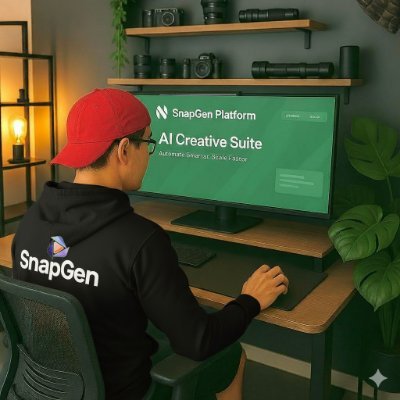
Screenify Studio vs CleanShot X: Recording Compared
Screenify Studio and CleanShot X both record your Mac screen, but they serve different needs. See how they compare on editing, sharing, and pricing.
TL;DR
CleanShot X is a screenshot-first utility that happens to record video. Screenify Studio is a recording-first app built around producing polished screen content. If your daily workflow revolves around annotated screenshots with the occasional short clip, CleanShot is the sharper tool. If you record tutorials, demos, or async walkthroughs and want AI-powered post-production without leaving the app, Screenify fits better.
| Feature | Screenify Studio | CleanShot X |
|---|---|---|
| Primary focus | Screen recording & sharing | Screenshots & annotations |
| Recording quality | Up to 4K 60 fps, Metal-accelerated export | Up to 4K, solid but secondary feature |
| AI captions | Built-in, auto-generated | Not available |
| Auto-zoom | Cursor-following smart zoom | Not available |
| Webcam overlay | Floating circle or rectangle | Not available |
| Annotations | Basic (post-recording) | Best-in-class (screenshots) |
| Scrolling capture | Not applicable | Yes (screenshots) |
| Sharing platform | Built-in cloud with link sharing | CleanShot Cloud (limited free uploads) |
| Export formats | MP4, GIF, WebM | MP4, GIF |
| Pricing | Free tier + Pro $149 one-time (or $19/mo, $119/yr) | ~$29 one-time / ~$10/mo via SetApp |
| Platform | macOS | macOS |
Who should read this
You are on a Mac, you need to capture what is on your screen, and you have narrowed the choice down to these two apps. Maybe you already own CleanShot X for screenshots and wonder whether its recording features are enough — or maybe you are evaluating Screenify Studio and want to know how it stacks up against one of the most popular Mac capture utilities. Either way, this comparison lays out the facts so you can decide based on your actual workflow, not marketing claims.
What is CleanShot X?
CleanShot X launched as a modern replacement for macOS's built-in screenshot tool and quickly became a favorite among developers, designers, and support teams. Its core strength is the screenshot pipeline: capture an area, annotate it with arrows and text, blur sensitive data, and upload it to CleanShot Cloud — all within seconds.
Where CleanShot X excels:
- Annotation toolkit — arrows, numbered steps, blur, highlight, text boxes. The annotation editor is one of the best on any platform and far surpasses what macOS Preview offers.
- Scrolling capture — capture an entire webpage or long document in a single image, something most screen recorders cannot do at all.
- Quick upload — one click sends the capture to CleanShot Cloud and copies a shareable link to your clipboard. Fast and frictionless for support threads and Slack messages.
- OCR text recognition — grab text directly from a screenshot without needing a separate OCR app.
- Desktop overlay — the floating thumbnail after each capture lets you annotate, pin, or share without opening a separate window.
Where CleanShot X falls short for recording:
- Recording is a secondary feature. There is no timeline editor, no AI captions, no cursor zoom, and no webcam overlay.
- The GIF recorder is convenient for short loops, but export options and quality controls are limited compared to dedicated recording apps.
- CleanShot Cloud focuses on images. Video hosting exists but is not the primary use case, and storage limits apply.
- No post-recording editing beyond trimming. If you need to cut sections, add zoom effects, or overlay captions, you will need a second app.
What is Screenify Studio?
Screenify Studio is a native macOS screen recorder designed for creators who want their recordings to look professional without learning a video editor. It captures your screen, webcam, and system audio in a single pass, then gives you AI-powered tools to polish the result before sharing.
Where Screenify Studio excels:
- AI-generated captions — automatic transcription and caption overlay, useful for social media clips and accessibility. No manual subtitle file needed.
- Auto-zoom — the app tracks your cursor and automatically zooms into the area you are working in. This makes tutorials significantly easier to follow, especially for complex UIs like IDEs or design tools.
- Metal-accelerated export — encoding uses Apple's GPU pipeline, so a five-minute recording exports in seconds rather than minutes on Apple Silicon.
- Webcam overlay — add a floating camera bubble (circle or rectangle) directly in the recording. Useful for product demos and Loom-style async updates.
- Built-in sharing platform — upload to Screenify Cloud and share a link. Recipients can watch in-browser without downloading anything.
- Free tier — recording, auto-zoom, the full editor and 3 share links at no cost (exports watermarked, 5 minutes max). The Pro plan unlocks AI features, 4K and no watermark.
Where Screenify Studio falls short:
- No screenshot annotation workflow. If you primarily need annotated still images, Screenify is not the right tool.
- No scrolling capture — it records video, not stitched images.
- Newer app with a smaller community compared to CleanShot X, which has years of user feedback baked into its polish.
Head-to-head comparison
Recording quality
Both apps capture at up to 4K resolution on compatible displays. CleanShot X records at the native display framerate and produces clean MP4 files, but it offers fewer controls over encoding settings. Screenify Studio lets you choose resolution and framerate (up to 60 fps), and its Metal-accelerated encoder means exports finish quickly even at high quality settings. If recording is something you do multiple times per day, the export speed difference adds up.
For GIF output, CleanShot X has a dedicated GIF recording mode that is simple and effective for short clips. Screenify Studio also exports to GIF but adds the option of WebM for smaller file sizes at similar visual quality.
Edge: Screenify Studio for video-focused workflows. CleanShot X for quick GIF captures.
Editing and post-production
This is where the two apps diverge most sharply. CleanShot X gives you a trim tool for video — you can cut the beginning and end — and that is essentially it. For screenshots, the annotation editor is excellent: arrows, steps, blur, callouts, text.
Screenify Studio treats the recording as the starting point. After capture, you can add AI-generated captions, apply auto-zoom to focus on cursor activity, toggle the webcam overlay on or off, and trim or cut segments. You do not need to export to a separate video editor for these common adjustments.
If your workflow is "record a 3-minute tutorial and share it looking polished," Screenify handles the entire pipeline. If your workflow is "screenshot a bug, annotate it, send it to the developer," CleanShot handles that pipeline better than anything else on macOS.
Edge: Screenify Studio for video editing. CleanShot X for image annotation.
Sharing and output
CleanShot Cloud gives you a quick upload target for screenshots and short recordings. The free tier includes limited uploads, and the link-sharing experience is clean. However, CleanShot Cloud is optimized for images, and the video player is basic.
Screenify Cloud is built specifically for video. Shared recordings open in a proper video player and show a view count per video, and Pro can serve share links from your own domain.
Edge: Screenify Studio for video sharing. CleanShot X for screenshot sharing.
Try Screenify Studio — free, unlimited recordings
Auto-zoom, AI captions, dynamic backgrounds, and Metal-accelerated export.
Pricing
CleanShot X offers a one-time purchase at approximately $29 (with free updates for a year), or you can access it through SetApp at around $10 per month alongside hundreds of other Mac apps. The one-time pricing model is appealing if you plan to use it for years.
Screenify Studio provides a free tier that covers basic recording and sharing with no recording time limit; free exports are watermarked and capped at 5 minutes. Auto-zoom is included on Free. The Pro plan adds AI captions, 4K export without watermark, and unlimited share links. If you only record occasionally, the free tier may be all you need.
Edge: depends on usage. CleanShot's one-time fee is great value if you primarily need screenshots. Screenify's free tier is hard to beat for casual recording, and Pro is worth it if you use AI features daily.
Privacy and local processing
CleanShot X processes everything locally. Screenshots and annotations never leave your machine unless you explicitly upload to CleanShot Cloud. This is a strong default for privacy-sensitive workflows.
Screenify Studio also records and processes locally. AI caption generation happens on-device using Apple's ML frameworks — your audio data is not sent to external servers for transcription. Exports use the local Metal GPU. Cloud sharing is opt-in; you can save recordings locally and never upload anything.
Edge: tie. Both tools keep your data local by default.
Platform and system requirements
Both apps are macOS-only. CleanShot X supports macOS 12 (Monterey) and later. Screenify Studio supports macOS 13 (Ventura) and later, with best performance on Apple Silicon due to its Metal-accelerated pipeline.
Neither app is available on Windows or Linux. If you need cross-platform recording, neither of these is the answer — consider OBS instead.
Edge: CleanShot X for slightly broader macOS version support.
Pros and cons summary
CleanShot X — Pros: best-in-class annotation tools, scrolling capture, OCR, affordable one-time pricing, mature and well-polished. Cons: recording is a secondary feature with minimal editing, no AI captions, no webcam overlay, no auto-zoom, video sharing is basic.
Screenify Studio — Pros: AI-generated captions, cursor-following auto-zoom, webcam overlay, Metal-accelerated export, built-in share links with view counts, generous free tier. Cons: no screenshot annotation workflow, no scrolling capture, newer app with a smaller community, requires macOS 13 or later.
Best for...
Choose CleanShot X if you:
- Take dozens of annotated screenshots daily for bug reports, documentation, or support tickets
- Need scrolling capture for long webpages and documents
- Want a one-time purchase with no subscription
- Rarely record video longer than 30 seconds
- Already use SetApp and want to consolidate tools
Choose Screenify Studio if you:
- Record tutorials, demos, or async video updates regularly
- Want AI captions without a separate transcription tool
- Need auto-zoom to make cursor-heavy workflows readable
- Share recordings via links and want to see view counts
- Want a free tier that covers basic recording needs
Use both if you:
- Need best-in-class screenshots and best-in-class recording. The two apps solve different problems and do not conflict. CleanShot handles your screenshot-and-annotate workflow; Screenify handles your record-and-share workflow.
FAQ
Q: Can CleanShot X replace a dedicated screen recorder?
For very short recordings (under a minute) that do not need editing, yes. For anything longer or anything requiring captions, zoom effects, or webcam overlay, you will likely want a dedicated recorder like Screenify Studio or another recording tool.
Q: Does Screenify Studio have screenshot annotation?
No. Screenify focuses on video recording, editing, and sharing. If you need annotated screenshots, CleanShot X or macOS Preview are better choices.
Q: Which app has better GIF export?
CleanShot X has a dedicated GIF recording mode that is optimized for quick captures. Screenify Studio can export to GIF as well but also supports WebM, which offers smaller files at comparable quality. For quick Slack GIFs, CleanShot is faster. For higher-quality loops, Screenify gives you more control.
Q: Is CleanShot X a subscription?
Not by default. The standard purchase is a one-time fee of roughly $29 with one year of updates included. You can also access it through SetApp, which is a subscription (around $10/month) that bundles hundreds of Mac apps.
Q: Can I use both apps together?
Absolutely. Many Mac users pair CleanShot X for screenshots and a dedicated recorder for video. There are no conflicts between the two apps. You could use CleanShot for annotated bug reports and Screenify Studio for product demos in the same workday.
Q: Does Screenify Studio work on Intel Macs?
No. Screenify Studio requires an Apple Silicon Mac (M1 or later) running macOS 13 or later. The recording and export pipeline is built on Metal and the Neural Engine of M-series chips.
Q: Which tool is better for recording without lag?
Screenify Studio's Metal pipeline is designed to minimize system load during recording. CleanShot X also records smoothly for short clips. For long sessions or high-framerate capture, Screenify's dedicated recording engine handles resource management better. See our guide on recording without lag for more tips.
Q: Do either of these tools record system audio?
Both can capture system audio on macOS, though macOS itself requires either a virtual audio driver or the newer ScreenCaptureKit API (macOS 13+). Screenify Studio uses ScreenCaptureKit natively. CleanShot X also supports audio capture in its recording mode.
Related reading
- How to Screen Record on Mac — overview of all methods including built-in tools
- Screenify Studio vs OBS — how Screenify compares to the open-source recording standard
- How to Record Without Lag — optimization tips for smooth captures

Try Screenify Studio
Record your screen with auto-zoom, AI captions, dynamic backgrounds, and Metal-accelerated export. Free plan, unlimited recordings.
Download Free